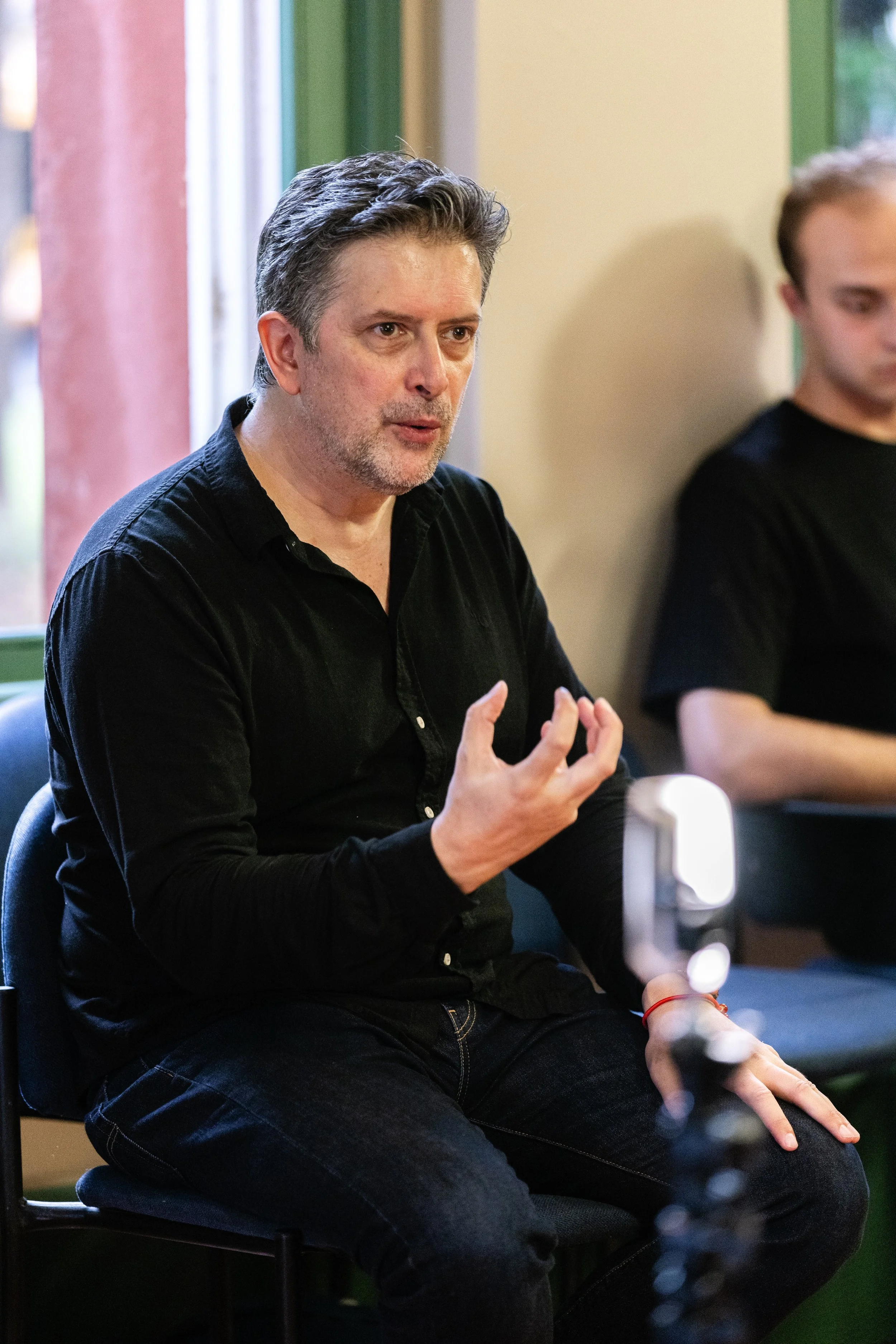
My Journey

My Journey with Neurodivergence in the Performing Arts
This is a journey shaped by passion, neurodivergence, and a relentless search for authentic performance. It is also the path that led to the evolution of The ‘Y’ Method and discovery of The Travis Technique.
Traditional Acting Techniques Felt Lifeless
For most of my life, I sensed that something about the way acting was being taught didn’t quite align with how I experienced the work. Acting lit me up. It always had. And yet in rehearsal rooms and workshops, I was repeatedly encouraged to approach performance analytically, breaking scripts down into objectives, beats, actions, substitutions. I could do it, but it felt obvious. Mechanical. As if the life of the story was being approached from the outside, rather than lived from within.
What I didn’t have language for at the time was that this wasn’t resistance or inability. It was intuition. I was instinctively drawn toward presence, play, and discovery. Toward absorbing the story by being inside it, rather than managing it from a distance. Long before I could articulate it, I could feel when something was being performed at the work instead of through it.
Understanding My Intuition
A late ADHD diagnosis gave me a framework to understand this more clearly. It prompted a deeper exploration into how different minds process meaning, experience, and learning. I began studying neuroscience, physiology, empathy, and deep learning, alongside workshops and conversations with leading thinkers in these fields. What became clear was that I wasn’t avoiding structure. I was processing meaning differently.
Where many traditional acting techniques approach performance from the outside in, my instincts had always moved in the opposite direction. From inside out. From lived experience toward expression. That realisation became the foundation of what would later be called The Y Method.
The Y Method is designed for intuitive, empathetic performers who have felt at odds with conventional training. People who are curious rather than controlling. People who sense truth before they can explain it. People who have been told they’re overthinking, too sensitive, or doing it wrong, when in fact they are listening deeply.
And for those who naturally lean toward analysis, The Y Method offers something equally valuable. A way to release control at the moment it matters most. To move beyond self-consciousness and into presence. To allow spontaneity, nuance, and depth to emerge without force.
This work isn’t about rejecting technique. It’s about restoring performance to something lived, responsive, and deeply human.

My Discoveries

Mark W. Travis
Discovering the Travis Technique
In 2019 I was invited to attend a 7-day intensive directing masterclass as an actor with Mark Travis, one of the world’s leading authorities on intuitive directing. I, along with a dozen other actors, were there for the directors to practice the Travis Technique on. I sat at the back, still believing I didn’t belong there. And then Mark said something to the directors that shook me to my core:
“So you think you’ve analysed your script? I guarantee you, you’re not even close!”
He wasn’t talking about objectives or beats. He was talking about intuition over cognitive reasoning about allowing the character’s subconscious to shape the story, rather than the director’s mind imposing control over it. This was a complete radical shift from the structured methods I had been conditioned to follow. And for the first time, I felt seen.
On day one, Mark recognised something in me that I had known all along but had never been able to articulate. He leaned toward me at the back of the room and said, "You already know this don't you?" and with all of the weight of years of struggle, I replied with a resounding "YES!"
In a single session, Mark, utilising his interrogation process I was able to transform into the character fully, instinctively without breaking the scene down into intellectualised parts. I wasn’t thinking, I was simply existing in the role, my conscious self was fully surrendering to the character. A character so vicious, aggressive and full of rage, reaching a level of emotion and causing everyone in the room to shift in their seats. Mark sensing the concern, calmly ended the scene and then utter silence, to everyone’s surprise there was no need for me to craft out, I simply uttered “that was amazing!”. The reaction from one of NZ's prominent directors? “I didn’t know you could do that.”
From that moment, I stopped trying to prove myself and started owning my process.
That moment turned into something unexpected. Mark shared that they were looking for a small group of people to carry the Travis Technique forward, a handful of practitioners who could teach it globally. And they both felt I was a natural fit to help pass on the baton.
I was stunned, and deeply honoured.
Not long after, I joined the Directors Lab in 2021, which included a number of programs including Deconstructing the Interrogation process a six-week program with a cohort of internationally acclaimed directors. It was a rare privilege to be learning and developing alongside such extraordinary creative minds. That time not only deepened my understanding of the technique but also reinforced my belief that this approach was worth sharing with the world.
Joining The Travis International Film Institute Team
My deep understanding of the Travis Technique led to an invitation to join the Travis International Film Institute (TIFI) Team (TIFI Team). Mark Travis recognised not only my ability to embody his method but also my skill in articulating why it works at a profound level. Being part of the Travis International Film Institute is both an incredible privilege and an inspiring experience. Working alongside internationally acclaimed, award-winning directors and filmmakers, I have the opportunity to contribute to a team that is redefining the way actors and directors connect with storytelling. The depth of knowledge, creativity, and passion within this team continues to challenge and elevate my work, reinforcing the importance of instinct-driven, emotionally authentic performances.
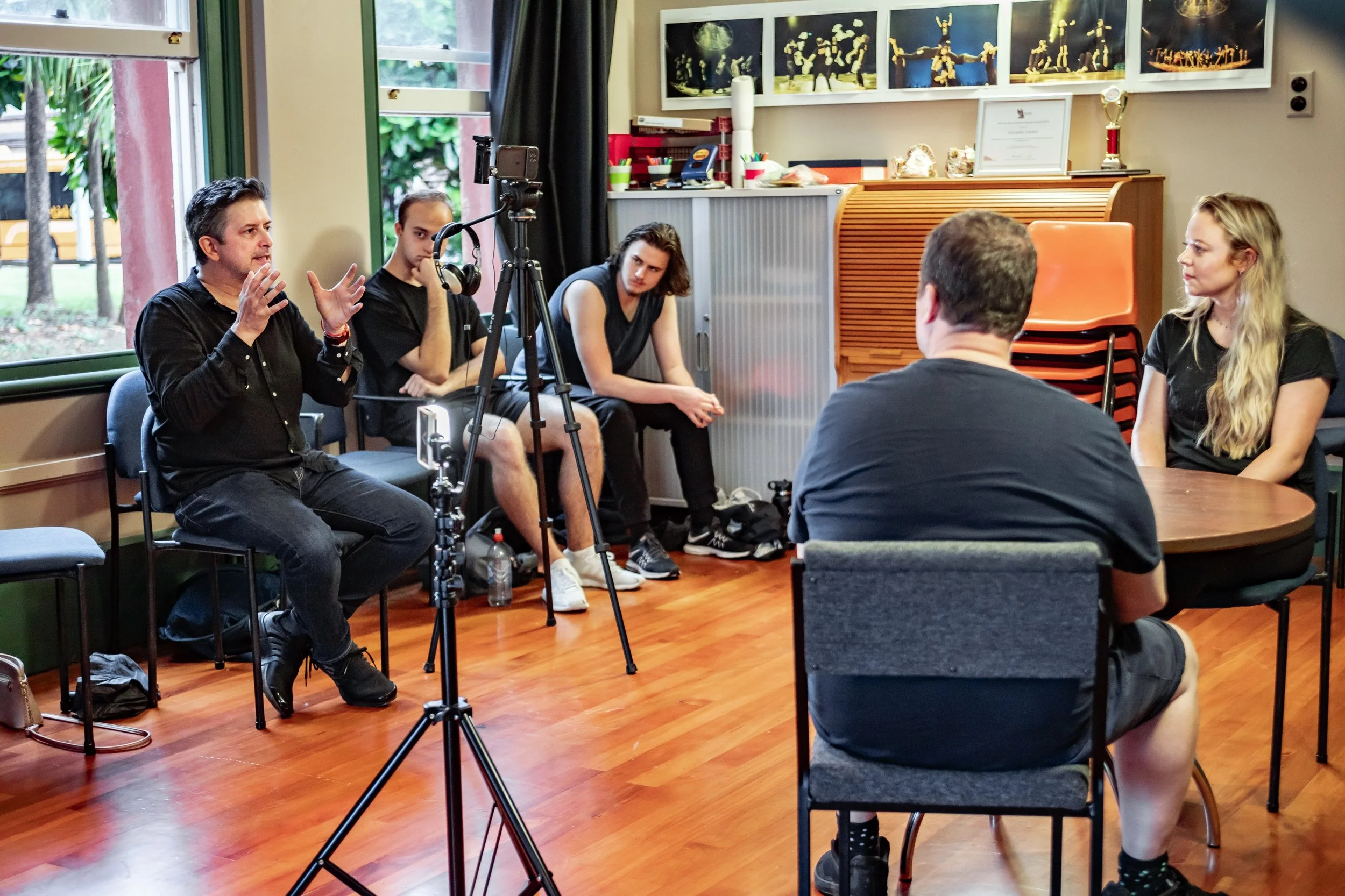
My Experience

Peter Feeney
The Actor’s Lab Founder
“Carl possesses a rare talent. I’ve seen the shift that he has wrought in an actor.It’s fundamental; a gear change into the kind of nuanced, subtle work that brings out the full personality and resources of the actor – and books work.I recommend his classes unreservedly.”- Peter Feeney
My Experience with The Actor’s Lab
Shortly after developing my approach, I was invited by Peter Feeney to speak at The Actor’s Lab, where I was asked to share my insights with neurodivergent students who were struggling with the same issues I had faced. What started as a simple conversation about tips and tricks for managing ADHD and dyslexia in acting quickly evolved into something bigger.
I asked the students a simple question: Why did you enter the performing arts? That question lit a spark. By reconnecting with their intrinsic motivation, they immediately became more engaged, more present. I encouraged them to read scripts from a place of curiosity rather than analysis, to explore a line not by intellectualising it, but by surrendering to the given circumstances and engaging with their scene partners in the moment.
Something clicked. Even the neurotypical students found it revelatory one even called it the “cheat code of acting” because their performance felt effortless, yet real and organic. What started as a guest session turned into something more permanent. I was asked to stay on as one of the main teachers at The Actor’s Lab, helping actors both neurodivergent and neurotypical experience the power of working from their subconscious synthesis rather than cognitive analysis.
During my time teaching at The Actors Lab, I found joy in guiding students toward something deeper than surface level performance. I began blending techniques with the Travis Technique to help them stop “acting” and start experiencing. That’s where the roots of The Y Method first began to take hold.
One moment sticks with me. A student performed a scene so truthfully, so transformative, that her own partner stood up from the group and shouted, “Who is she?”. That wasn’t acting as imitation, it was something authentic emerging from within.
Those were the kinds of shifts I lived for.
“Those who know, do. Those who understand, teach.”
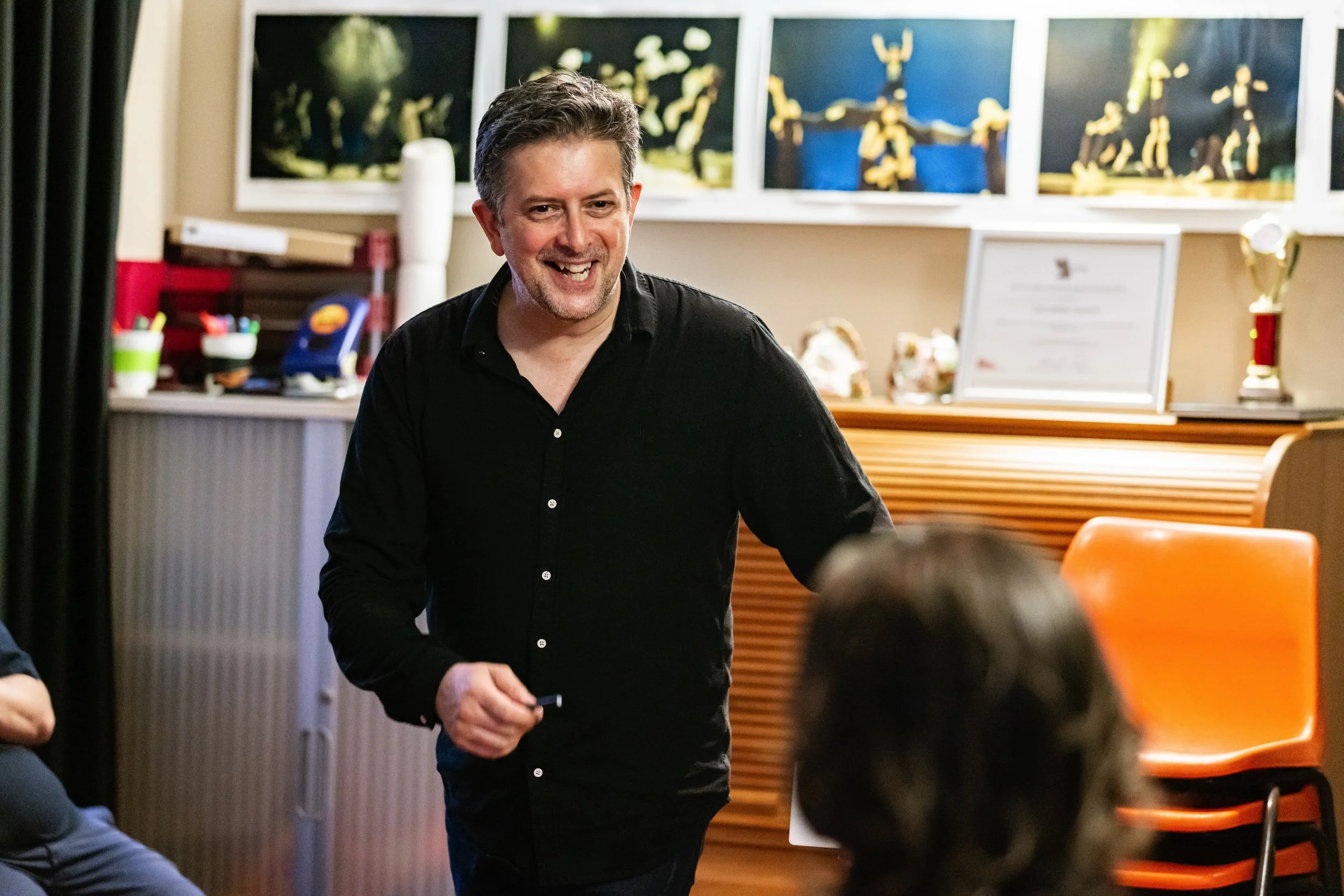
My New Passion
My New Passion for Coaching
The Science Behind the Method
I became obsessed with understanding why this worked, why my intuition had rejected traditional acting methods, why surrendering to curiosity, wonder, and subconscious absorption led to deeper, more authentic performances. I studied Whole Brain Thinking by Dr Jill Bolte Taylor, Carl Jung’s persona theory, Todd Herman’s The Alter Ego Effect, the psychology of deep learning, and how the subconscious shapes creativity. I trained directly with Mark Travis, becoming part of his team, learning how to extract the character from within the actor, rather than the actor to imposing themselves onto the character.
Expanding My Knowledge and Training
Additionally, I have undertaken online training in body language with Vanessa Van Edwards and studied Neuro-Linguistic Programming (NLP) workshops, further deepening my understanding of how human behaviour, subconscious communication, and psychological patterns influence performance. Unlike traditional acting techniques that often emphasise a single learning style, my method incorporates all seven learning styles, ensuring that every actor regardless of how they process information has access to a method that works with their natural strengths rather than against them.
How I can help?
If you’ve sat in acting classes feeling like you just don’t get it, if you’ve second-guessed yourself, masked, overcompensated, or gaslit yourself into believing you’re the problem, I want you to know you’re not alone. More importantly, you were never the problem.
Your brain simply works differently. And that difference? It’s not a weakness, it’s your greatest strength.
I offer one-on-one coaching and run acting classes in Studio Three at TAPAC in Auckland on Wednesdays, where I guide actors to connect with their roles in a way that feels natural, effortless, and alive without forcing emotional self-extraction or relying on rigid techniques that don’t serve them.
If you’ve ever felt like the industry wasn’t built for you, I’m here to tell you: The method was the problem, not you.
There’s a better way. And I’d love to help you discover it.
Simply fill out the form, come join us, and see if this masterclass is the right fit for you.
Who knows? You might even find your tribe.
With love,
Carl